Why Environmentalists Should Care About the Free Market
Growing up, I liked nature for the simplest of reasons: the look of a park, the ordinary pleasure of walking outside. In the late 2010s, though, the news began to tell a sharper story. I remember hearing that the world had only twelve years left because of climate change, and that capitalism was to blame for the Earth’s environmental troubles.
Today I care about both nature and free markets. I do not think they conflict, or that they are mutually exclusive in the way they are so often portrayed. I firmly believe the opposite: capitalism is the key to protecting the Earth.
Economic Freedom
The best way to view the relationship between environmental stewardship and free markets is through the Economic Freedom Index. The index measures how free people in a given country are to take part in economic life, weighing the size of government, the legal system and property rights, sound money, freedom to trade internationally, and regulation.
A literature review of the data by the economist Robert Lawson found that economic freedom has improved the income and living standards of the average individual the world over. The environmental record points in the same direction. When researchers examined environmental outcomes such as CO2 emissions, pollution, and biodiversity, about 42 percent of the studies found that economic freedom was linked to better outcomes, while only about 17 percent found it was linked to worse ones.
One reason is that prosperity makes stewardship affordable: a family worried about its next meal has little room to worry about the local environment, while a wealthier society can afford cleaner air and water.
Property Rights Improve the Environment
Free markets improve the environment because they improve the incentive to care for it, via property rights. Think of the tragedy of the commons: when a finite resource belongs to everyone, no one has a strong reason to conserve it, so it tends to be overused. Private ownership changes that, encouraging people to use land more carefully than they would if it were held in common.
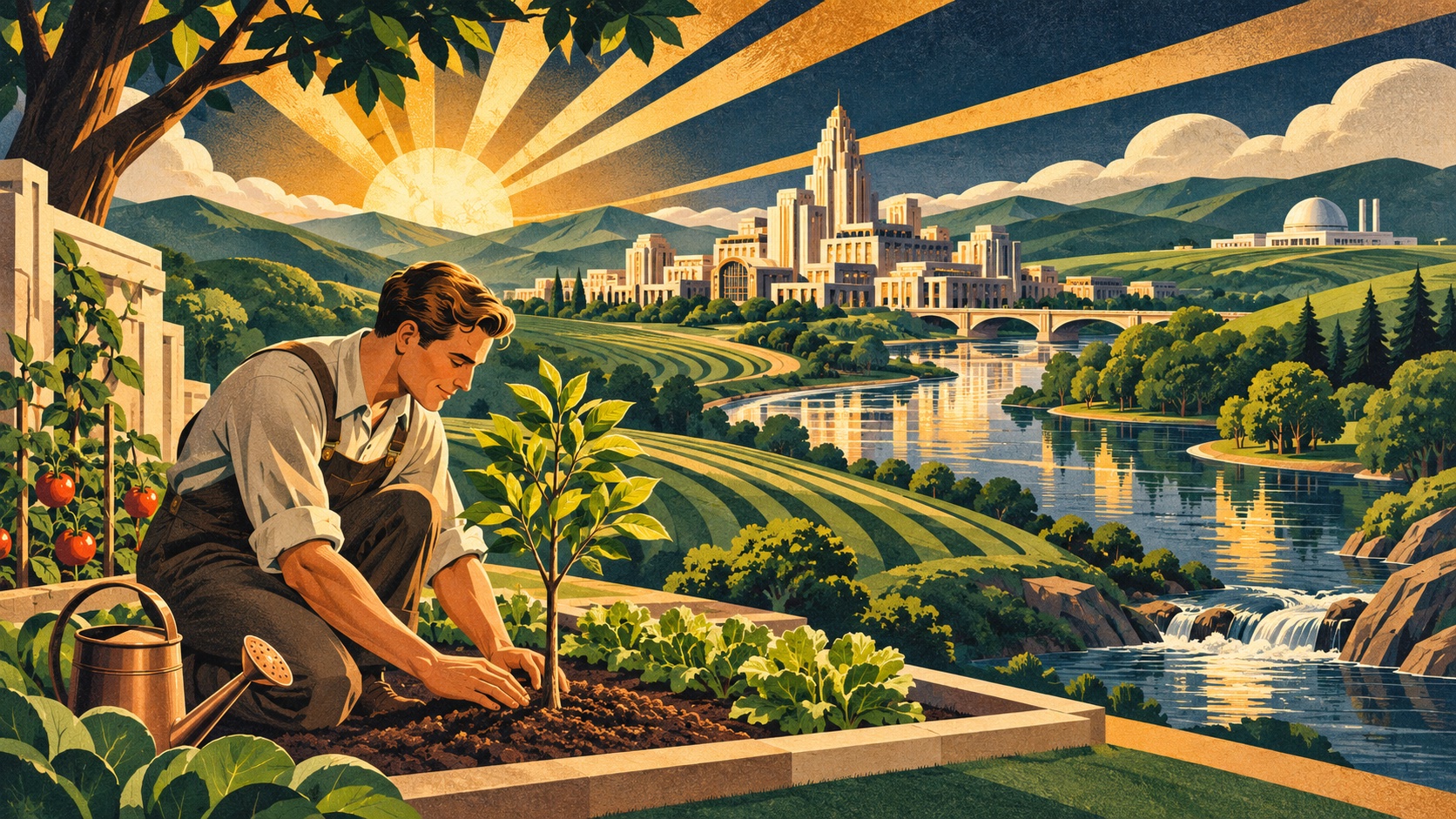
A garden makes the point plainly. If you owned one, you would most likely try to make it as beautiful and productive as possible. Under collective ownership, there is a standing and likely risk that everyone takes from the garden and does very little if anything to care for it.
The Soviet Union put that logic on a national scale. Most of the land was collectively owned. Even so, research by John W. De Pauw shows that in 1966 the small private plots Soviet families were allowed to keep, on just over 3 percent of the country’s sown land, produced 43 percent of its vegetables and 66 percent of its eggs. People take better care of what is their own.
Capitalism vs. Socialism
Socialist protesters have painted capitalism as one of the greatest harms to the planet. History suggests otherwise. Socialist and communist regimes have often devastated their environments, and nowhere more thoroughly than in the USSR. The scholars Murray Feshbach and Alfred Friendly Jr. made the case in their book Ecocide in the USSR: Health and Nature Under Siege. In it, they detail how pollution had damaged 75 percent of the Soviet water supply. One emblem of that ruin is Lake Karachay, which Soviet authorities used as a dumping ground for radioactive waste. Not to mention the tragedy of Chernobyl.
Capitalism, by comparison, generally works against environmental harm by imposing costs directly on those who cause it. Companies perceived to pollute, or convicted of polluting, face real costs, and consumers “vote” with their wallets. Markets also reward cleaner solutions. Technology companies facing rising energy demands are a clear case. Entrepreneurs such as Sam Altman, the CEO of OpenAI, invested in nuclear companies Oklo Inc. and Helion Energy, betting on clean power for the AI era. Other major companies have followed. Meta, for one, is funding nuclear infrastructure that could power five million homes.
How to Promote the Environment Through Capitalism
A society can hold what is good in both the environment and capitalism by defending property rights and by honoring consumer choice. Time and again, property rights have motivated people to maximize the return on what they own, precisely because they need not fear that someone else will take it away. Beyond private property, we as consumers should support companies that pursue innovative ways of advancing social and economic progress from within.
That is the practical lesson. Caring for the Earth does not require a retreat from an economic model that produced historically unparalleled levels of prosperity and freedom. It requires the institutions that make people answerable for the ground beneath them, and free to gain when they leave it better than they found it.
Conner McEleney is a Principled Business member and the founder of Catallaxy, part of the 2026 Principled Business Startup Accelerator cohort.