A new book from Principled BusinessCapitalists for Capitalism: The Book
Become a Reviewer
Too many people assume that anyone in business supports capitalism. They don't. Even business leaders often think they understand capitalism because they're in business, and many don't. This book closes that gap.
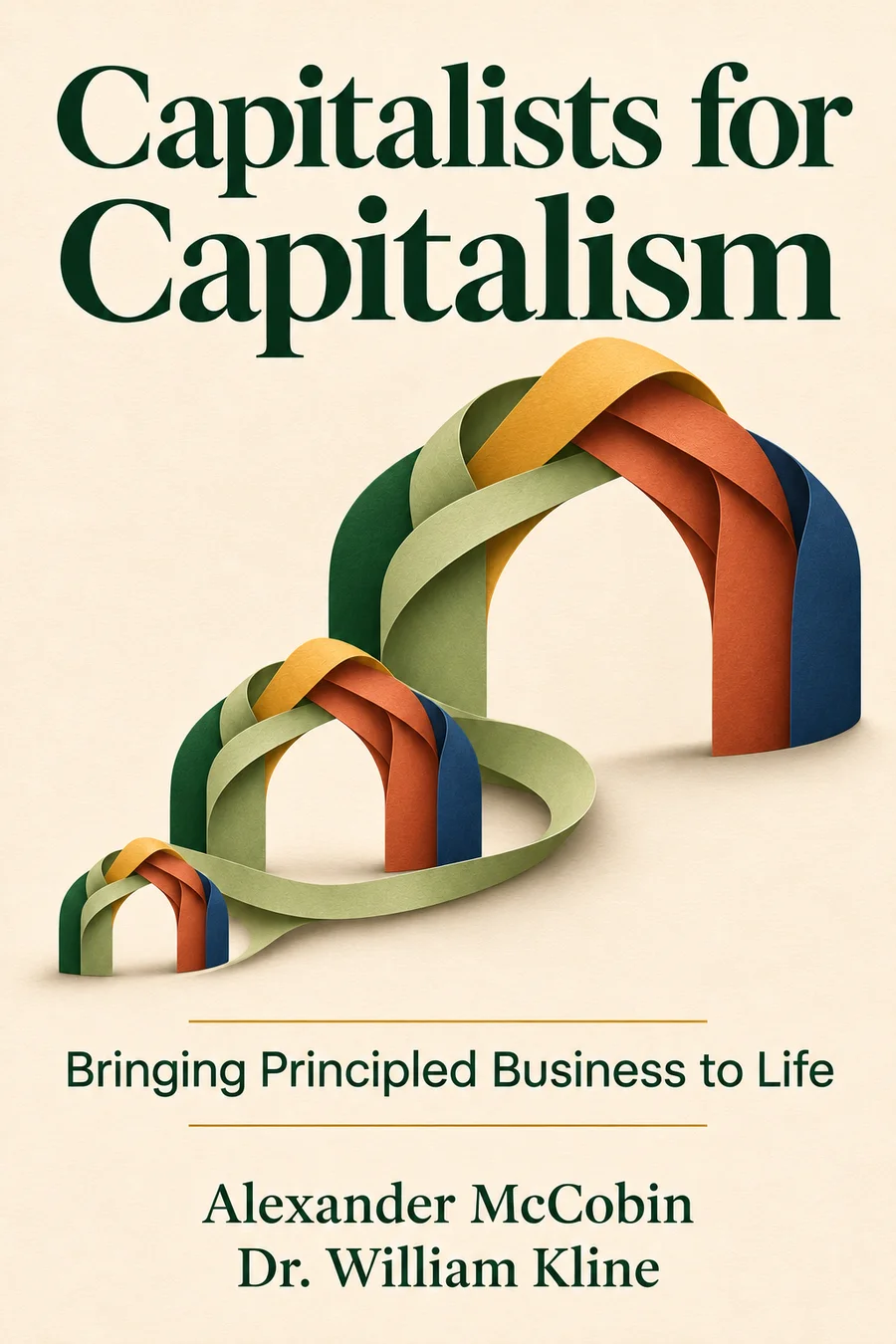
The bookA field guide for the person in the arena
Too many people assume that being in business means being for capitalism. It doesn't. There are people who own capital, run firms and collect returns who do not understand the system they work in, will not promote it, and would happily trade it for a game with more political leverage and less customer veto. Even many good business leaders assume they understand capitalism because they practice it. Capitalists for Capitalism names that gap and was written to close it.
It is a completed book for the founder who still answers customer emails, the CEO who allocates capital and culture, the investor who decides which futures get funded, and the manager who sets the tone on a Tuesday afternoon. It is not an academic treatise and not a culture-war pamphlet.
It does three jobs at once: it helps you be more successful in business, it gives you a reason to be proud of the work, and it equips you to defend the system your company depends on. At its center are five principles of capitalism: respect for individual agency, opportunity to create, creating value, collaboration, and bottom-up experimentation.
The vision: one million capitalists for capitalism
The book will be offered first to the Principled Business network. From there, the goal is to spread it far and wide and bring more business leaders into the movement, helping us reach one million capitalists for capitalism.
The storiesBusiness leaders whose decisions fill these pages


Bernie Marcus and Arthur Blank (Home Depot)
turned the org chart upside down, with customers on top and themselves at the bottom.

John Mackey (Whole Foods)
learned in his first year that business runs on cooperation, not exploitation.
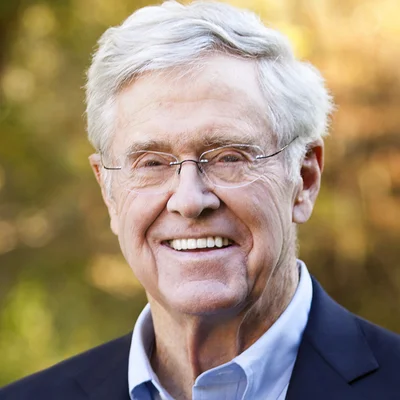
Charles Koch (Koch Industries)
spent decades making Hayek's ideas work inside a company.
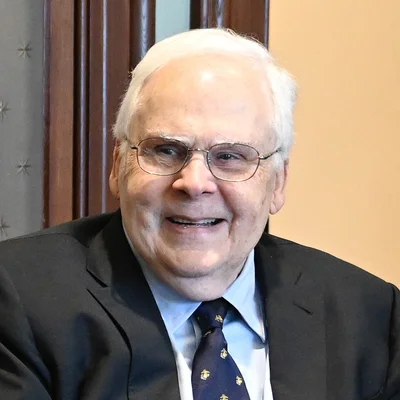
Fred Smith (FedEx)
turned a college paper about overnight freight into a company, then bet on it to survive.

Peter Thiel (PayPal)
built a payments network under fire and judged every person on one thing.


Patrick and John Collison (Stripe)
saw that payments online were a guild and built the rail anyone could use.

Greg Glassman (CrossFit)
defined a product you could measure and let thousands of owners run their own way.

Palmer Luckey (Anduril)
puts his own capital at risk instead of living on cost-plus government contracts.

Marc Andreessen
argued that a society that outlaws the experiment outlaws the knowledge.

Jimmy Lai
sold newspapers because more information makes people more free.
Plus the cautionary tales: the CEOs who talked capitalism down and what it cost them.
Who it's forWritten for people who already have a job
- A language for the system you work in: a paragraph you'd sign, without sounding like a pundit or a Davos panel.
- A practical playbook: five principles and a Monday-morning version you can run in your own company.
- A heritage worth claiming: how traders, Quakers, coffee houses and Adam Smith built the free society, and why profit under consent is something to be proud of.
ExcerptFrom Chapter 1: Capitalists vs. Capitalism
"Why would a capitalist not be for capitalism? Because playing in a game is not the same as loving the game. Children get put on teams they never chose. A boy can wear a baseball uniform and still hate baseball. A girl can run the soccer field because her parents signed the form, not because she wants the rules, the excellence, or the sport itself. She is in the game. She is not for the game. She may even work to end it so she can play something else. The same thing happens in economic life."
What's inside
- 1
Part I. Why Capitalists Must Defend Capitalism
Why silence is not neutrality, and how to spot the purpose-washers.
Capitalists vs. Capitalism; Identifying Anti-Capitalists: Purpose Washing; The Practitioners Must Defend the System
- 2
Part II. Reclaim Your Heritage
How business people changed feudalism, defeated mercantilism, and gave us Adam Smith.
How Business People Changed Feudalism; How Business People Defeated Mercantilism; Celebrate the Revolution: Adam Smith
- 3
Part III. The Moral Case for Capitalism
Profit under consent is evidence that someone else said yes.
From Plunder to Production; Making Lives Better Off; Consent and the Rules; Freedom's Civilizational Record; Business Is Consent and the Corporation Evolves; Virtuous Leaders
- 4
Part IV. The Principles of Capitalism
The five principles, and a playbook to run on Monday.
Respect for Individual Agency; Opportunity to Create; Creating Value; Collaboration; Bottom-Up Experimentation; The Liberty-Minded Playbook
- 5
Part V. Action
Represent, advocate, collaborate, answer the critics, and use the lever you actually hold.
Represent, Advocate, Collaborate; Defending Against Critics; What This Means for You; Conclusion: Speak Boldly, Act With Principles
Why read it nowWhy review the manuscript
- 1
Help build a new school of thought. Get in early on a new way of thinking about business, and build on it with your own books and articles.
- 2
Share your stories and principles. We're looking for more stories and principles to include, and we'll credit the reviewers who share them.
- 3
Arm business leaders for the fight. Help build the intellectual ammunition and inspiration business leaders need to take on socialism.
- 4
See big ideas put to work. Watch abstract ideas from philosophy and economics applied to business itself, and help shape the analysis business students will read.
- 5
Work with the people in the arena. Collaborate with business leaders, the men and women in the arena, to find the right models for building the future we want.
The reader circleWhat you get as an early reader
- Early access to the full manuscript before publication
- Your name in the acknowledgments
- An invitation to our reader roundtables
- A signed first edition
The askRead one chapter. Tell us one thing.
One chapter
about 20 minutes
Full manuscript
about 62,000 words
What we're looking for
- 1.How can we make this a page-turner readers don't want to put down?
- 2.What compelling stories are we missing?
- 3.What's confusing and needs clarification?
- 4.What points don't make sense?
- 5.What arguments, analysis or principles are missing?
The authorsOne writes from the arena. One writes from the classroom.

Alexander McCobin
Founder and President, Principled Business
Alexander builds companies and funds them. He leads Principled Business, publishes Capitalists for Capitalism magazine, and runs Liberty Ventures, which invests in and builds companies. He has spent his career convening founders, operators and investors who want a better language for the work they already do.

Dr. William (Bill) Kline
Professor, University of Illinois Springfield
Bill is a full professor in the College of Business and Management at the University of Illinois Springfield, where he has taught business ethics and the ethics of capitalism for more than 15 years. He is a senior fellow at the Academy on Capitalism and Limited Government, holds a Ph.D. in Philosophy from Bowling Green State University, and studied economics at Grove City College.
Join the readersGet the manuscript
Photo credits
- Bernie Marcus: Rabbi Pinchas Taylor, CC BY 3.0 (Wikimedia Commons)
- Arthur Blank: Thomson200, CC0 (Wikimedia Commons)
- John Mackey: Gage Skidmore, CC BY-SA 2.0 (Wikimedia Commons)
- Charles Koch: Gavin Peters, CC BY-SA 3.0 (Wikimedia Commons)
- Fred Smith: DHSgov, Public domain (Wikimedia Commons)
- Peter Thiel: Gage Skidmore, CC BY-SA 3.0 (Wikimedia Commons)
- Patrick Collison: JD Lasica, CC BY 2.0 (Wikimedia Commons)
- John Collison: UK Prime Minister, CC BY 2.0 (Wikimedia Commons)
- Greg Glassman: jblumenthol, CC BY-SA 2.0 (Wikimedia Commons)
- Palmer Luckey: Xuthoria, CC BY-SA 4.0 (Wikimedia Commons)
- Marc Andreessen: JD Lasica, CC BY 2.0 (Wikimedia Commons)
- Jimmy Lai: Office of Speaker Nancy Pelosi, Public domain (Wikimedia Commons)