The Real Regulators of Business
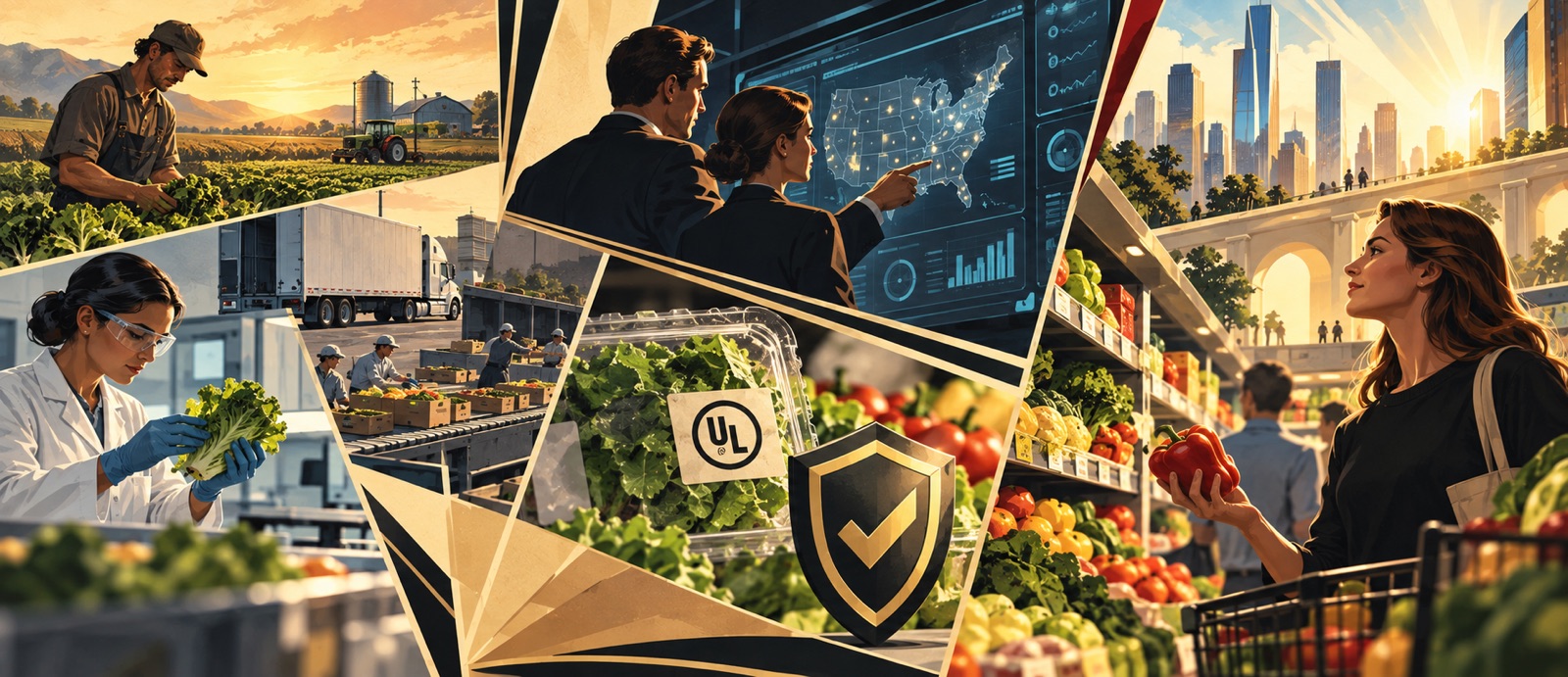
In the wake of many publicized food recalls throughout the summer, people like me have avoided fruits and vegetables for fear of foodborne illnesses.
This series of events has challenged many people’s perspectives on capitalism and increased demand for government regulation, even though many companies had voluntarily recalled their food before it even hit store shelves.
I was initially concerned that the market couldn't solve it, but now I trust the market more than ever to solve it and, in fact, self-regulate itself without the government.
Market self-regulation
In September, it was announced that Chipotle is collaborating with Palantir to address food safety concerns. Palantir could use data such as the health department and pest incidents to determine the food safety of the restaurant chain.
This news story shows that businesses themselves could self-regulate to promote consumer safety. After all, it wasn't the government mandating the deal; rather, it was businesses striking mutually beneficial agreements to promote prosperity.
Modern examples of markets self-regulating themselves
One of the greatest examples of the market self-regulating itself is the business Underwriters Laboratories. A scientific inspection company that has successfully inspected products, including technology and certain materials, to ensure they are safe. Businesses will be given a seal of approval on products that reach a certain quality standard.
Many businesses like Walmart and Target honor the seal by placing it on their shelves, and if a product doesn't have the seal, it won't be sold. These businesses care about providing quality because losing customers is bad for business.
Historical examples of markets self-regulating themselves
The best example of a business doing self-regulation is Johnson & Johnson's handling of the Tylenol crisis in 1982. In 1982, random Tylenol bottles in Chicago were reported to be spiked, resulting in a couple of deaths. This caused Johnson & Johnson to voluntarily recall all its products, even though it was reported only in Chicago. It also led Johnson & Johnson to create a safety seal to protect consumers from tampering.
The economist Edward Stringham, in his book “Private Governance: Creating Order in Economic and Social Life,” shows how markets have solved their own problems. In it, he shows how the market enforced ethical standards on the stock exchanges in Amsterdam, London, and New York to prevent fraud. Stringham later presents modern examples of businesses finding innovative ways to crack down on fraud, such as PayPal developing its own systems and hiring experts, rather than the government creating regulations.
The greatest form of self-regulation
Many organizations have developed ways to promote safety in the market. However, the best incentive for a business to self-regulate is through consumer demand. A business can’t really do anything without consumer support. It is truly the power of the consumer to decide which business best handles their needs. It's like a more effective form of democracy, where instead of the majority being chosen despite your choice. Your choice will generally prevail in determining the better business.
Doing this research has shown me that whenever a disaster happens, the best way to solve it is to allow individuals in the market the freedom to decide the next course of action. An individual could decide who to do business with, while partnerships of skilled groups could find a creative solution to influence people.
As Adam Smith once wrote, which is “It is not from the benevolence of the butcher, the brewer, or the baker, that we expect our dinner, but from their regard to their own interest. We address ourselves, not to their humanity but to their self-love, and never talk to them of our own necessities but of their advantages.”